Waiting for a tourist

20th April 2011 – 5.42 pm

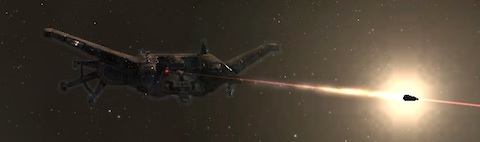
Roaming our neighbouring system is short-lived. I take my Manticore stealth bomber out for a look in the class 3 w-space and am happy to see ship activity. A Drake battlecruiser is at one of the two towers, along with a Buzzard covert operations boat, and I can see a Myrmidon battlecruiser on my directional scanner. I warp to the other tower to check that the Myrmidon is there and fly directly through the tower's force field, dropping my Manticore's cloak. I feel suitably stupid as my supposedly covert ship becomes visible to the glare of four pilots at the tower, and warp away before the defences start shooting. I think it's time to collapse our static wormhole and start again.

Scanning afresh, glorious leader Fin resolves our new connection to class 3 w-space. Jumping in puts us in d-scan range of a tower but no ships, and blanketing the system with probes confirms a lack of activity. Also revealed is a second tower, no anomalies, and eleven signatures. I take it upon myself to locate the towers and create bookmarks at suitable monitoring positions, whilst Fin starts to sift through the signatures. The first wormhole she finds is interesting, being a random outbound connection to further class 3 w-space, the second is the system's static exit to low-sec empire space.

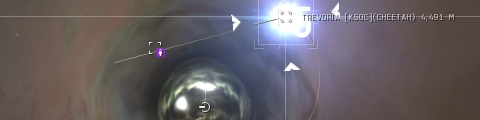
Fin heads to the exit to check the destination system in k-space, but as she gets to the wormhole a Cheetah cov-ops boat appears, launches probes, and cloaks. Any activity is interesting, but there's not a great deal we can do about a cloaked scout, at least not for the moment, so we leave him to it for now. Fin exits to low-sec, I warp to the N968 wormhole to the second C3 system. The w-space connection is now in its end-of-life stage, giving a few more hours before it collapses naturally, but I'm never particularly comfortable using an EOL wormhole. I jump through to see if any opportunity awaits and, although there are plenty of anomalies and signatures, there are no ships in the system. I jump back to the first C3.

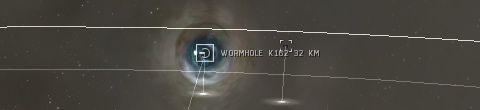
There's little to do for the moment, but rather than collapse our static connection again we decide to take a little time to see if we can catch the scouting Cheetah. Presumably from his actions he is a tourist from low-sec and will be heading back in that direction. We head home to swap ships, Mick and I boarding interceptors, Fin choosing her Flycatcher interdictor, and we settle down in a little camp on the exit wormhole in the C3. Mick jumps to low-sec to cover the escape route more effectively, whilst Fin inflates a bubble on the wormhole in a bid to panic the Cheetah in to wanting to leave sooner rather than later. I loiter on the exit wormhole in the C3 looking menacing in my Malediction.

The Cheetah pilot isn't fazed by the presence of an interdictor and interceptor in the system. Either that, or he simply doesn't notice us. It's difficult to tell if he's experienced and nonchalant or green and naive. Whatever his familiarity with w-space we are now in a waiting game, the Cheetah's escape primarily determined by our levels of patience. Our combined level of patience is not terribly high, but I am more confident in catching a cov-ops boat when in an interceptor than otherwise, and the exit to low-sec lets us chase him back in to k-space without fear of Concord reprisal. With Mick and Fin covering the exit I consider it prudent to sit on our K162 heading home, just in case our target heads deeper to w-space.

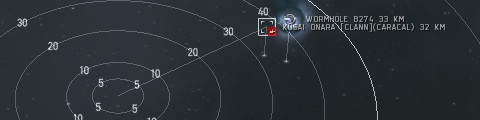
We may not have long to wait for this Cheetah after all. His ship appears on d-scan, but not physically at either of the two wormholes we're stalking. I sweep d-scan around trying to locate him, and am surprised to see that he appears to be on a direct line between our K162 and the static exit of the C3. He's definitely not at the wormholes themselves, and Fin suspects that he's perhaps sitting off-grid. That's okay, we have just the ships to get to him quickly if that's the case. I warp to the exit wormhole, where I can align back to the K162 and burn in my interceptor at five kilometres a sceond, hopefully to surprise the Cheetah pilot. Instead, as I regroup with Fin at the exit and before I can even turn my ship around, the Cheetah surprises us.

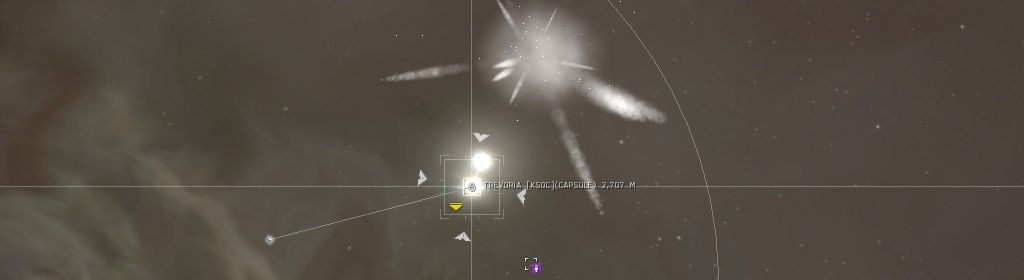
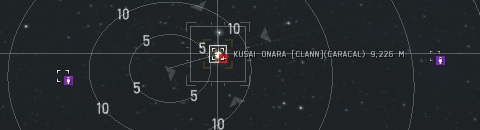
Our cov-ops target warps to the exit wormhole, uncloaked and vulnerable. I earlier rejected the idea of anchoring a bubble on the wormhole because the Cheetah could have cruised through it cloaked and we wouldn't know until he jumped out. That's why Mick is in low-sec at the moment, to be more prepared to catch the target jumping out of w-space. I'm readying myself to follow the Cheetah in to Mick's clutches, making sure I have the wormhole selected for the inevitable jump. And even though I am fully expecting the Cheetah to jump out I am not going to idly sit back and wait for him to do so, instead trying to get a positive target lock as the cov-ops drops out of warp. I get the lock and, with all systems hot, disrupt his warp engines and start shooting.

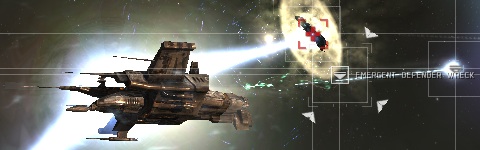
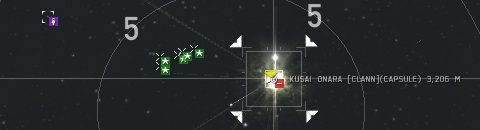
Fin joins in the assault, as I prepare to jump behind the Cheetah out to continue the fight in low-sec space. But he doesn't jump, and our weapons blast their way through shields, armour, and then structure until the ship explodes. Now escape is harder, as the session change timer prevents the pod from jumping through the wormhole, and even if the pilot weren't obviously disorientated Fin's Flycatcher can launch a warp disruption probe to stop him fleeing. We easily catch the pilot's pod and make a fresh corpse to scoop, looting and shooting the wreck too to leave no trace. Poor Mick asks what's happening and can only jump back to see our two ships looking smug but guilty. We honestly thought the Cheetah was going to jump out.

Ambush complete and successful, we've exhausted our options in this system. We return home and collapse our wormhole again, the new one connecting us to a class 3 system holding allied pilots, giving us a benign constellation and a good opportunity to relax. The calmer period gives me time for reflection, and I think I may be able to explain the Cheetah's odd choice of actions. Fin noted earlier, shortly after noting the appearance of the Cheetah, that the low-sec scout was scanning the wormhole he'd just entered through. It's possible that the pilot mistakenly resolved the wormhole without realising which one it was, and he dropped out of warp thinking it to be a different exit to low-sec. If he thought that, he may have preferred to try to warp away rather than jump out, causing his curious behaviour.

I don't know for sure why the Cheetah didn't jump, and we can't ask his corpse, even if we throw him a tea party with all the other corpses. Maybe I need more jelly and ice cream. I can work on that tomorrow, as now it's time to get some sleep.

Missing a Maller

19th April 2011 – 5.35 pm

Interesting ships await me in w-space today. Our home system is quiet, but scanning my way to our neighbouring class 3 system has a Thanatos carrier, three Dominix battleships, and some industrial ships visible on my direction scanner. The three identical battleships make me think there may be a fleet formed for Sleeper combat, and the possibility of a salvager to ambush, but scrutinising the d-scan result further shows no signs of wrecks. That's okay, maybe they are just about to start. I warp away to find a place to launch probes without being detected, but only manage to locate a Drake battlecruiser and Kitsune electronic attack ship at a second tower.

The second tower in the system is easy to find, being on the outskirts of the system, and I can confirm that the two ships here are both unpiloted. No pilots present means no one to witness my decloaking and launching probes, so I do, moving them promptly out of the system. A blanket scan finds me a mere two anomalies and four signatures, with ten ships in the system in total. That agrees with what I've seen so far, so all I need to do now is find that first tower and determine what, if anything, is happening. I warp back to the centre of the system and sweep d-scan around, locating first the planet and then the moon where the tower sits, disappointingly finding only an Orca industrial command ship and Cheetah covert operations boat to be piloted.

The Orca isn't boosting the efficiency of some yet-to-be-found miner in the system, as all ships on my blanket scan are accounted for between the two towers. But there may be a hint of activity, as some core scanning probes are visible on d-scan. With only a few signatures to resolve the scout should be finished quickly, so I recall my probes, warp home, and plant my Malediction interceptor on our static wormhole in wait. And I wait a bit longer. I would suggest that scanning can't possibly take this long, but I've seen some scouts dragging their heels. Even so, I don't think the Cheetah is coming this way, and neither does scribbling that as a note magically cause him to appear whilst I am distracted. I was sure it was going to help.

I go back to the C3 in my Buzzard cov-ops ship to scan the five signatures, thinking I may as well see what else is out there. I thought it was four signatures, but never mind. Ignoring the K162 connection leading home I resolve a ladar site, gravimetric site, wormhole, and, oh, a second wormhole. Maybe that is a new signature I detect after all. The first wormhole is the system's static connection, leading out to low-sec empire space, the second is a K162 coming from another class 3 system, and is no doubt active to some degree. Jumping through puts me out of d-scan range of any ships or towers, and I take a risk by launching probes directly on the wormhole, cloaking again as soon as I can. A blanket scan returns no anomalies, seven signatures, and three ships. I go looking for the ships.

Two ships I find around two towers, on different moons of the same planet. Both are Ibis frigates and of little interest, although one of them is rather close to the edge of the tower's shields. As I was in this system only six weeks ago, and I seem to remember an Ibis in a similar situation, I wouldn't be surprised if the ship hasn't been moved in that month-and-a-half. It remains inconsequential, though, and I have a third ship to locate. Still not seeing it on d-scan I make a second scan with my probes, which now only resolve the two Ibis ships. Whoever was here is now gone, a third scanning also confirming that, and I take the opportunity to start resolving the signatures here.

I ignore the Ibis ships from my scan results and make one further safety scan of the system. The third ship is back, and looks to have a cruiser hull. My probes are at their maximum range and can't pin down its location to any degree of accuracy, but warping around finds the ship to be a Maller cruiser. He's gone again, and I am none the wiser as to what he's up to. I start scanning quickly, hoping to find whatever connection he's using so that maybe I can catch his next entrance, resolving a K162 coming in from low-sec, a gravimetric site, a K162 from class 4 w-space that would be more interesting if the wormhole weren't at the end of its lifetime, and... the Maller is back.

The Maller is not at either of the wormholes I've resolved, nor at a local tower, keeping me oblivious about his location. I decide that I would rather find out what the Maller is doing than remain concealed, and press on with scanning, focussing my probes towards the Maller directly. I resolve the ship's position, coincident with a third wormhole, and warp to see the Maller loitering on a K162 from class 2 w-space, a wormhole that is critically unstable. I think it's safe to say the pilot is in the midst of collapsing one of his system's static wormholes. I don't know if this will be his last jump or not but if it isn't I'd like to be here when he comes back, and in a pointier ship.

I recall my probes and rush back home, getting a recently woken Mick in to a stealth bomber and updated as I travel. I have two jumps to get home, a stealth bomber to board, and two jumps to get back here. Travelling between and across systems can be deceptively slow and I doubt I'll return to see the Maller, or even the wormhole, but I want to give it a go. Warping across the second C3 in my Manticore doesn't see the Maller on d-scan, but he was coming and going anyway. It is only when I drop out of warp to see empty space that I know I have been too slow. The wormhole has been successfully collapsed.

I don't think I was particularly slow in working out what the Maller was up to, as collapsing a wormhole is not a particularly easy activity to discern from d-scan. Of course, his successive appearances and disappearances should have been a clue, but I would have expected bigger ships. I imagine that in this case the Maller was being used to give the wormhole the final push. I was hoping the cruiser was collecting gas, making him a more likely target. It doesn't really matter, though, the Maller's appearance merely being the only activity I've seen so far today. I've had my little rush across a couple of systems for some limited excitement, and have some bookmarks to use for later roaming, so for now I head home and take a break.

Pimping my Golem

18th April 2011 – 5.26 pm

Hello wormhole, my only friend. No one is home when I wake up so I scan the system to find our static connection and see where it takes me today. I jump in to our neighbouring class 3 w-space system to a clear directional scanner, with just the one planet currently within range. I launch probes and blanket the system with them to see five anomalies, four signatures, and no ships. I adjust my scanning filter to include structures and I note a tower is anchored somewhere, but locating the tower shows it to be off-line.

An unoccupied system with some anomalies sounds like an ISK-making opportunity, except this C3 holds a black hole, which reduces missile velocity significantly, and most of my boats fire missiles. I take a few minutes to resolve the three signatures that aren't the K162 wormhole leading homewards, resulting in bookmarks for a radar and magnetometric site, and the system's static wormhole. I don't visit the wormhole for now, preferring instead to keep it closed, as I have no immediate need to exit w-space and no desire for tourists to come in this way either. I head home, copy the bookmarks made to our shared can, and take a short break.

Mick's around when I get back and, with little other option, I suggest clearing an anomaly or two for profit. I tweak the fit on my Golem marauder a little, removing one of the active invulnerability fields for a second passive shield boost amplifier, hoping that the increased boost will offset the reduced shield resistances, whilst also freeing a little more capacitor juice for the booster. At least I have an escort for this test flight, although I doubt I'd have any problems. But it is only when we jump in to the C3 that I remember it is a black hole system and not good for missiles, including my already short-range torpedoes. It's good that the anomalies we have lined up, unlike some others, all have Sleepers who get in to close range.

To give a bit of additional damage I try setting my drones on the Sleeper frigates. But the Sleepers are too keen to switch targets and pop drones to make using them worthwhile, which is fine with me. It would be great if Sleepers ignored drones, but having to monitor them, as well as switch their targets, is just another detail I'd rather not manage on top of the normal target selection, attacking, tractoring, looting, and salvaging. I suppose it's really only the salvaging aspect that complicates combat in a Golem, but having a mixture of Sleepers and wrecks, looted wrecks and unlooted wrecks, wrecks in looting range and wrecks not tractored, all whilst keeping an active target painted and torpedoes firing adds up to possible confusion. I think it's impressive I've only destroyed one thankfully looted wreck with torpedoes so far.

The two sweet anomalies are cleared in good time and we decide to move on for now. Mick checks the static exit in this C3, finding it to lead to high-sec empire space and only eleven hops from Jita. I take seventy-five Miskies of loot back to our tower and, with the profits flowing in nicely recently, hear the siren call of buying a deadspace module for the Golem. The lure is too great and, as Mick heads out to pick up some items from Jita, I follow behind my colleague, a contract already picked from the pile for a Gist B-type X-large shield booster. Almost twice as much shield boost for slightly less capacitor juice than my current Dread Guristas large shield booster, it's impossible to resist. But it costs so much ISK, Fin's going to kill me.

I take the recently acquired Sleeper loot out of empire space to sell on the same trip, which at least doesn't make our corporation wallet look quite so bad when the contract for the booster is accepted. The last few days' profit almost covers the cost of the booster, making it seem reasonable if I close my eyes, cover my ears, and shout 'la la la' to ignore having to pay Mick his share of the loot. I almost succeed in that too, but my conscience kicks in a bit later and I remember to pay him. After all, he's being kind enough to pick up the shield booster for me, already having travelled to Jita when I am still wandering around looking for an NPC to buy the Sleeper loot. I just hope it gets back to our tower safely, so that I can at least fit it to the Golem before losing a module that costs more than my fitted Tengu.

'It seems I got home exploding', Mick tells me. Um, should 'without' be in that sentence, perhaps? Apparently so, and he 'definitely meant to type it'. Goody. I get back too and fit the Golem with its new stupidly expensive shield booster. Ooh, look at that. The ship is capacitor-stable in our home pulsar system, which boosts ship capacitors, and lasts for a good thirteen minutes in an ordinary system, all with almost twice the shield boost of the affordable module. I just hope I haven't made it too expensive to fly. But there are bound to be more tales of Sleeper combat coming soon, if only because I need to replace the ISK I've spent.

Question time

17th April 2011 – 3.58 pm

Apparently my writing is opaque enough that I have prompted one reader to write in with a bunch of questions about w-space operations. Luckily, I like the sound of my own typing and I am happy to answer them. Hold on to your hats for an extended post, as brevity is not my strong suit. 'Terse' isn't even in my vocabulary! 'Succinct' is, which let me use a thesaurus to find 'terse', but I didn't then look it up in a dictionary so that I can still make the claim about it not being in my vocabulary. On to the questions:

Doyce: How do you "sweep d-scan around" in specific directions, and through what arcane method do you use d-scan plus scan probes to figure out things like "I knew the hulk had to be in the second gravimetric site I scanned down"? Do you use both combat probes and core?

I'll answer this question by first not actually answering it. I use both core and combat probes, depending on the situation. I have a curious attraction to core scanning probes and tend to prefer using them when resolving only sites, but as they don't detect ships I will nearly always be found using combat scanning probes outside of the home system. Combat probes let me see quickly and easily how many ships are in a system, as well as getting a ship's precise location in space resolved for me to warp to, which is useful when hunting miners, as rocks tend to be far from the deadspace signature and gas clouds are awkward to navigate. Being able to drop on top of the ship, or a specific distance away, is invaluable and cannot be achieved when using core probes. But I only use one type of scanning probe at a time, and always combat probes when hunting.

As for sweeping d-scan around, we need to understand how the directional scanner works.

The directional scanner lets a pilot detect other entities in the local space around her ship, where 'local' extends to a little over 14 AU. Whilst the general setting of d-scan negates its 'directional' aspect, the 360° setting can be narrowed through a number of increments to get a finer bearing in any particular direction, right down to a 5° precision. By pointing in the right direction and continually adjusting the angle of d-scan's beam it is possible to get a decent bearing on an object in space.

Thankfully, you don't need to have your ship pointed in the direction of space you want to cover with d-scan. Modern sensor technology maps the operation of d-scan with that of your external camera view, with d-scan's beam centred on the locus of your ship. Spinning your view around therefore moves the d-scan beam around. This has no effect when d-scan is set to 360°, but narrowing your focus to 180°, 90°, 60°, and so on, will refine your search to incrementally smaller cones of space. With enough trial-and-error adjustments, you will have a good idea of the direction an object is in relation to your ship.

As for finding ships in sites, the power of d-scan is also available in the system map. Open up the system map and make sure the view is centred on your current location. This should happen automatically, but if you warp around you will need to select the planet or bookmark you are currently sitting at to get the view centred on your position. Now you can use d-scan just as you would in the ship view, spinning your perspective around and narrowing the beam angle to find other ships. Set d-scan to a 5° angle, arrange your view so that a particular bookmarked site is in a direct line with your current location, and refresh d-scan. If ships appear, they are in that site. If not, move to the next site and repeat until you've found them.

Locating a ship in a site that you haven't yet bookmarked requires a little more finesse, as we need to assume that they will be watching d-scan themselves and will be scared away if they spot combat scanning probes in the system. What we need to do is locate the target's position as best we can using d-scan, then arrange probes around that position, scan, and recall probes as soon as possible. The better the positioning of the probes the greater the likelihood of getting a 100% strength scan that can be bookmarked and warped to, and the less time scanning probes will be visible to the target. This is why it is important to understand how d-scan works. I previously wrote about hunting in w-space but I did so without reducing the steps to a bulleted list, which is probably why no one paid attention to it.

Doyce: Related to that, you've mentioned that having your ship somewhat close to an anomaly you're scanning down helps you with the resolution process. It seems like d-scan factors into that in some way. How? (Or, alternately: did I totally misunderstand that?)

Maybe there's a bit of misunderstanding, so I'll try to clarify that first. There is an on-board scanner built in to every ship that can detect some sites, which in w-space will be the anomalies. Scanning probes are needed to locate ladar, gravimetric, radar, and magnetometric sites, as well as wormholes. The on-board scanner has a limited range, detecting anomalies out to about 5 AU, in my experience. If the system is either too small or too densely inhabited for scanning probes to be launched covertly it remains possible to locate ships engaging Sleepers in standard anomalies using this on-board scanner, but you'll need to be within the scanner's range to detect them and maybe need to warp around to find the relevant anomaly.

If the ships aren't in an anomaly and you are able to launch scanning probes you still benefit from getting as close as possible to the target. You need to first use d-scan to get a good bearing and range on the target in order to position probes as accurately as possible before scanning, so that the probes are not visible on the target's directional scanner any longer than necessary. And the reason for getting as close as possible is maths! An angle subtends an arc of increasing length the farther away the arc is from the locus. Forgive my sketch, as I can't draw arcs.
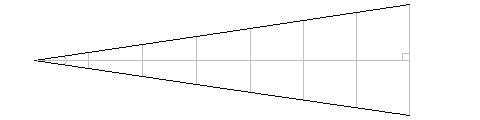
As you can see, for the same given angle a greater arc is created the further away it is from the locus. For d-scan, the narrowest beam is effectively a 5° cone extending out to a little over 14 AU. Let's crunch some numbers.
Distance from locus (AU) Subtended arc (AU)
1 0·087
2 0·175
4 0·349
8 0·698
12 1·047

When close to the target, a tight d-scan beam gives a low error margin, certainly when considering the minimum scan range of 0·5 AU for combat scanning probes. But the more distant the target the greater the uncertainty of its precise position, to the point where the target could be more than 0·5 AU away from your projected centre point, so you could theoretically place a probe directly on top of where d-scan suggests a ship is but actually miss it entirely.

On top of that, gauging distances is not always easy, particularly in three dimensions and where the target is invariably not on the same horizontal plane as you. Trying to position a probe on a diagonal at a certain distance can be tricky, even when stringing together in a row more than one virtual probe's sphere to get a better estimate of the range.

Trying to position probes with such uncertainty is prone to inaccuracy, and as sites tend to appear within 4 AU of celestial objects there is no real reason to make scanning harder than it needs to be. The closer you are to the target, the more straightforward and accurate the positioning of probes becomes, and the greater the chance of a successful first scan.

Doyce: Related to that, how do you go about finding towers? Simply hop from moon to moon until they show up on overview, or is there more to it than that?

Towers will appear on d-scan, as long as your overview settings show them or you are not using that setting on d-scan and have everything visible. Once you know a tower is in the system, sweep d-scan around on a fairly narrow beam to interrogate each planet until the tower appears on the same scan as only one planet. Warp to that planet and, preferably with the moon bracket visible on your display, sweep around each moon until the tower coincides with just one of them. That moon has a tower anchored to it.

Doyce: Do you keep your system notes separate from the game, or just use the notes field that comes with each bookmark, in-game?

There's a notes field? I actually purge all of my bookmarks for w-space systems once the connecting wormhole has collapsed. Even though there is a possibility of visiting the same system again there is no guarantee that it will be soon, or that the bookmarks will remain valid. Cosmic signatures will certainly change, wormholes definitely, and occupancy can change too. Some towers can be missing a month after first noting them, others can still be in place after a year. I also don't want to have to work through hundreds of bookmarks in the current clunky system, so I keep my notes separate. I have previously posted an excerpt of the spreadsheet I use to keep track of w-space system visits, and I can quickly search against the system number to see if I have visited before and find relevant information.

Doyce: When setting up safe jump locations in the system (say, outside a tower), it seems as though using "warp to moon at 100k" is a good way to end up a high-traffic location. Is that a problem? If so, is there some other method you use for landing at a good out of the way observation spot?

The likelihood of physcially bumping in to another scout monitoring a tower is tiny, partly because w-space never seems that populated, partly because approaching from different directions drops your ship at different points, but mostly because any scout worth her salt will always move away from the default warp-in position. For a start, it is advisable to position yourself to be inside a hundred kilometres of any ships in the tower, so that you can 'look at' them with the camera and see which direction they warp off, letting you follow them to anomalies, wormholes, or customs towers. If you drop out of warp outside of a hundred kilometres from the tower you will need to move closer. The relatively arbitrary direction and distance of travel will result in a position to lurk quite safe from accidental exposure from other scouts.

Even if you don't need to move to get within a hundred kilometers of any ships, or the hangars if no ships are present, it is always advisable to move away from the default warp-in point, whether at a tower, planet, or wormhole. Staying in the same position can result in collisions, as you note, however unlikely they may be. As for it being a problem, if I decloak another scout I'll probably start shooting, so it's not a problem in that sense. When operating in a fleet we are careful to communicate where we are when lurking cloaked and so don't bump in to each other.

Space also happens to be rather big. A ship needs to move within two kilometres of another before decloaking it, and managing that even when you know the ship is there is difficult. Bumping in to one accidentally is highly improbable. On a couple of occasions recently we have come close to being decloaked, hostile ships appearing within three kilometres of Mick and myself on separate occasions, but even then it is not close enough. To give an idea of the volumes involved, consider a mere five kilometre radius around a wormhole. The wormhole itself will prevent a ship cloaking, so that inner two kilometre sphere of approximate volume 33·510 km3 can be disregarded. The five kilometre sphere has a volume of 523·598 km3, which ignoring the inner sphere gives a total volume of approximately 490 km3 to hide in. Each ship will have its own 33·510 km3 sphere of decloaking, which is about 6·8% of the total considered volume. Expanding the hiding area out to a ten kilometre radius from the wormhole reduces the decloaking percentage to less than 1% of the total volume. It's fairly easy to remain hidden in space, as long as you are not predictable.

Doyce: You tend you use "point" to describe (I think) blocking warp ability on a target, but you also use a couple other phrases for it, and it seems as though you have more than one warp-block module on your bomber. What are they? Which is the 'point' and what's the other one usually called? Relatedly, I don't see you using webbing modules, and while I see those sorts of things on most 0.0 'roaming' builds, I imagine you don't bother because you have long range with missiles and don't need to keep them close to you.

My understanding is that 'point' is a jargon term used by capsuleers to refer to any single-target warp disruption effect. I throw the term around occasionally, but as I consider it jargon I try to be careful to explicitly mention warp disruption first so that the meaning of 'point' can be inferred. I try to keep my writing as accessible as possible to the average capsuleer, as well as the mythical casual reader.

There are two basic warp disruption modules. One is the 'warp disruptor', which has a warp disruption strength of one and an effective range out to twenty kilometres, although that can be extended by the quality of module and the bonuses of some specialised ships. The other is the 'warp scrambler', which has a warp disruption strength of two, also disrupts micro warp drives (but not afterburners), and has a shorter range of around nine kilometres. I believe either can be referred to as a 'point', as getting a point normally means preventing the target from warping away.

That warp scramblers disable MWDs enhances their utility quite a lot, as it can reduce fast ships to a crawl, and their increased strength can overcome ships defensively fitted with warp core stabilisers. But the decreased range of the scrambler can make it less practical to use, particularly on a stealth bomber that initially wants to stay somewhat further than fifteen kilometres from the target. I am also not too keen on the term 'scramble', as to me it envisages making ships active in flight, not effectively grounding them, which is why I tend to revert to 'point'.

We use web modules on occasion, but most of the time the situation doesn't demand slowing ships down so much. Maybe part of this is because of the targets we tend to go for, and the ranges we attack at, and I suppose primarily using missiles makes a web less necessary. But I think the main reason we don't use webs is that wormholes throw you out almost always within range to jump right back, so there isn't really an occasion where we are trying desperately to slow a ship down as it is running back the way it came, as I imagine happens on stargates.

Doyce: I'm terribly curious to see your Manticore's fitting, but I realize that may be giving too much away on the site.

It would be giving away too much operational information for me to post that here, as well as open me up to a host of criticism and derision over a situational fitting that I have proved to work for me. So I instead posted my Manticore fitting over at glorious leader Fin's site, where she lets me run amok with musings about mechanics and the meta-game on the rare occasions I have them.

Doyce: It seems you're running a large tower, and that you don't do any PI stuff to keep them running with your own materials, which means you're keeping it up with significant monetary outlay. What's the ballpark pricetag on keeping the tower running and secure for a month, when you have to buy everything off the market?

No idea. Fin handles the accounts. But we earn enough from shooting Sleepers to keep the tower running, pay for replacement Legions, Lokis, and Tengus, and splash out on the occasional new toy.

Doyce: I noticed that when you and Fin went looking for a system to work out of, you specifically wanted a pulsar C4 with a static connection to a C3. What was the reasoning for that? C4 would mean you're in deep enough that k-space tourists are less likely? Just really like pulsars?

Shortly before moving in to, and then out of, a class 5 w-space system we were cruising through anomalies in our previous class 4 w-space home in Tengu strategic cruisers. The C5 anomalies were more difficult and best flown in bigger fleets with remote repairs, so moving in to another C4 seemed to give us the best achievable profit for our capability as a duo. Not having a direct link to empire space keeps the opportunity for exploration and hunting, as well as making it less convenient to amount an attack on us from outside the system.

Pulsar phenomena boost shield and degrade armour systems, and as we are both Caldari and, at the time, primarily flying Tengus against Sleepers it seemed optimal to move in to a pulsar system if we could. Our Tengus would get the boost to shields and the Sleepers' armour would be negatively affected to our benefit.

Doyce: Related to that, I notice you almost never run sleeper sites in your own system. Is that because the system is played out (doesn't seem like it), or simply that C3s are more efficient to run with a relatively small group? If that latter, I'm back to wondering why you selected a C4 in the first place.

When choosing a w-space system to inhabit you cannot look only at the class of system where you anchor your tower, you also need to consider where the static wormhole leads. Your home system will invariably run dry of sites at some point, either from your own excursions or by passing fleets looking for profit. Whilst Sleepers gradually repopulate systems it can take a while, leaving you either twiddling your thumbs or looking farther afield for activity. It is often a better plan to look first in your neighbouring system for profit, exhausting that before clearing any sites at home, as the system beyond the static wormhole essentially acts as a renewable resource.

We could have chosen a class 4 system with a static connection to another class 4 system, like the one we lived in previously, but a C4/C4 can lead to tortuous routes back to empire space, making scanning, refueling, and other logistics rather tedious and dangerous. It also almost forces us to rely on class 4 sites for profit, which whilst generating plenty of ISK is not quite as manageable solo than lower-class system anomalies. Getting a C4/C3 system was the next best choice, for the decreased difficulty of Sleeper sites whilst remaining profitable for our time. We also considered that inhabitants of lower-class systems are more likely in general to be softer targets than those living in C4s or above, making hunting a better prospect. If we had known that all class 3 w-space systems lead to k-space we may have picked differently, but the guaranteed daily link to k-space is working out quite well.

We have also subsequently seen that class 2 w-space anomalies are not really worth the time investment for us, so although the two static wormholes of a C2 would give greater exploration opportunities the available profit would be rather dreary. In contrast, we have found one type of class 3 anomaly to be quick and efficient to run, with no surprises or complications, and a decent profit for invested time. That they are so easy to clear is perhaps the reason we barely pay heed to the anomalies in our home system these days. It's maybe more by luck than judgement, but we've found a good system to call home.

Salvaging as we go

16th April 2011 – 3.11 pm

Eight sweet anomalies wait next door. Fin's scanned our neighbouring class 3 w-space system to find the anomalies, along with no occupation, a static exit to null-sec k-space, and a K162 wormhole reaching the end of its lifetime leading in from low-sec. It looks like another good night to make some profit from Sleepers. It's curious how the ebb and flow of w-space life works, but I suppose there is some self-deterministic function at work too. If we weren't after the iskies we would ignore the anomalies, collapse our wormhole, and look for capsuleers to hunt. As it stands, we're enjoying exploiting the efficient anomalies and I have a new ship to continue experimenting with.

Fin boards her Tengu strategic cruiser, I am still in my Golem marauder, having apparently slept in it by accident, and we jump in to the class 3 system to start shooting Sleepers. My Golem's configuration is unchanged from yesterday, still with the large shield booster that allows me to survive as long as the Sleepers shoot someone else most of the time. I hope to change that soon, either by completing skill training or buying expensive replacement modules. For now we'll do just fine. And once the first anomaly is cleared, and salvaged at the same time, Mick turns up to add his Tengu to our fleet. Now we'll really burn through the sites.

I can't keep up! Combat was hardly restful with Tengu and Golem, but a second Tengu sees ships popping left and right, and I have much more to do than when in my own Tengu. Moving in to a suitably central position is far from onerous, particularly in these anomalies where all the Sleepers generously close to within shooting range anyway, but if only it were that simple. I am broadcasting our next target, so that we can co-ordinate fire to make best use of my boosted target painter, which I need to do ahead of the current target's destruction to keep up the pace. The wrecks are targeted, tractored to my ship, looted, and the salvager activated. And I also have to balance my shield boosting with capacitor levels, as I can't simply leave everything running, which means paying attention to when I'm being hit and when I'm not; not realising which state I'm in either drains my capacitor or gives my colleagues cause for concern as my shields drop below half.

Right now I am struggling to keep up with salvage. The extra firepower is creating wrecks more quickly than my single salvager can manage to strip them of parts. At least a new kill order helps with my tank, the battleships of the final wave targeted before the frigates. My Golem blows the battleships away more quickly than our Tengu fleet does, and removing their heavy-hitting damage from the field relieves my shields more than destroying the gnat-like frigates. In general, I only need to pulse my shield booster whilst the last two battleships are active, so dealing with them before the frigates makes combat simpler all round.

I'm a little insulted when both Tengus take it upon themselves to orbit my Golem to keep their transversal speed up, making it seem like I have my own gravitational pull. It may be true that I am bulkier and less agile than a strategic cruiser but I am not that fat. 'The Golem is like Mak, but with practice', Fin points out, 'and a few cinnamon rolls', probably not referring to the ship's colourings. Their tactic is effective, though, keeping our own ships clustered to bring the Sleepers closer, which helps negate my sluggish speed.

Salvaging may be a little slow relative to a dedicated boat, but it's surprisingly efficient to salvage as we go. A couple of times we move on to the next anomaly leaving a handful of wrecks behind for later retrieval, but mostly there are only one or two wrecks to salvage once the Sleepers are cleared, and it doesn't take long to wait for them to be stripped. I find it amusing that my already expensive target is being stuffed with profit, making me even more alluring to pirates. But, as Mick points out, it is probably safer than making a separate run in a Noctis salvager, and I think he's right.

A Noctis is a pretty easy target to ambush, as we've proved ourselves on many occasions, least of all because it can't fight back. Most salvagers aren't protected by strategic cruisers, either. Any capsuleer hoping to ambush our salvaging operation would have to be able to overcome a Golem whilst surviving itself, at a minimum, and if it could do that then a Noctis certainly wouldn't survive. And if a fleet were able to ambush the Golem and Tengus, and we were defeated, then we would not be returning with the salvage either way. In the end, we clear all eight anomalies, salvage and all, in just the one trip. We return home with a healthy profit of just under four hundred and fifty million ISK in loot. That's nearly enough to buy some deadspace modules.

Golem test flight

15th April 2011 – 5.59 pm

I think it's time to test my Golem. No one's home, here or in our neighbouring class 3 w-space system. There is a tower in the C3, in the same place it was on my last visit a couple of months ago, and I resolve but don't warp to the static exit to low-sec empire space. A second wormhole looked interesting but it disappeared before I could warp to see what it was, and as it didn't respawn elsewhere I am assuming it wasn't the static wormhole. There are three anomalies present in the C3, and all are the same efficient type we've been clearing as our first choice. With no capacitor-neutralising ships, no warp disruption, and some battleships to test my torpedoes against it seems like an opportune time to take my newly bought marauder out for combat.

My first configuration for the Golem has an extra-large shield booster fitted. Even though this beast sucks my capacitor dry in a couple of minutes the shield boost amount will be more than enough to cope with any damage the Sleepers can inflict in a standard class 3 w-space anomaly. I already am prepared to pulse the booster when required, it's just a matter of whether I can balance shield with capacitor reserves for the duration of an anomaly. Fin has suggested that I shouldn't test the Golem alone on its first flight, but I bought the marauder to make clearing anomalies by myself more efficient and running solo seems like the best test. I just hope I don't do anything particularly stupid and get it destroyed.

I jump in to the C3 and warp to the first anomaly, chosen because it is the only one of the three that is within d-scan range of the local tower. As much as I'd like to stay hidden, I'd prefer to see if and when the locals wake up as early as possible. At the anomaly I start closing on the first Sleeper battleship, aware that my torpedo boat has limited range, keeping an eye on the incoming damage. I lock the battleship, activate my target painter, and start firing. My torpedoes certainly are much more effective than the heavy missiles of the strategic cruiser, either assault missiles or standard heavies, and the battleship is going to be destroyed far more quickly than were I in my Tengu. But I am also taking more damage.

My slow speed and large signature radius is taking its toll on my shields. The damage from the battleship and three Argos guns is nothing my shield booster can't cope with, but the booster is taking its own toll on my capacitor. In fact, I can't keep both of them balanced, even with pulsing the booster. It is rather disappointing that an advanced battleship cannot withstand the onslaught of a rather basic Sleeper attack, but I think I have my first test complete. I am already aligned to leave and, before the first Sleeper battleship pops and calls in reinforcements, I warp home.

Fin turns up as I jump in to our home system, and my plea that I wasn't shooting Sleepers is not particularly convincing when I warp back to the tower in my Golem. But we discuss the events and what can be tweaked. It's possible we could destroy the Argos guns to lower the incoming damage—we currently leave them because their damage can be tanked, they drop no loot and offer no salvage, and they despawn harmlessly with the site—although that would take more time and ammunition, negating the Golem's advantage somewhat. I modify my fitting a little, swapping the extra-large booster for a merely large booster, still not quite stabilising my capacitor but making it last significantly longer. The large booster may not have quite enough repair capability to overcome the sustained Sleeper damage, though. There's one way to find out, and now I have Fin in my wing to help.

We jump in to the C3 and warp to the anomaly I started, and quickly finish off the Sleeper battleship limping towards us. The next wave consists of cruisers, which we swat to one side. My shield is surviving, if only because Fin has drawn the ire of the Argos guns and I am having to repair almost no damage anyway. The frigates in the final wave create a little trouble, probably because of the two battleships they bring and their tendency to target me. The total damage is greater than my booster can keep up with, but we pop the frigates quickly enough to get the incoming damage back down to manageable levels, before making short work of the target-painted battleships. The Golem really hits the big ships hard, too. I know that the hulls of Sleeper ships are much weaker than their strong armour plating, but to see a battleship be popped from two-thirds hull with a single volley of my torpedoes is mighty impressive.

The first anomaly is cleared. It's more than cleared, it's salvaged too. Whilst continuing to shoot Sleepers my Golem has been using its extended-reach tractor beam to haul wrecks close and salvager to strip the wrecks of their value. The Golem is a most efficient ship. We move on, clearing the other two anomalies in pretty quick time. Including salvage, we are sweeping through the sites about as quickly as we were with three Tengus the other night. In terms of firepower, then, the Golem is about two Tengus' worth, which almost agrees with its cost. Of course, I am not quite at the point of running sites solo, but the Golem looks to complement a strategic cruiser quite nicely indeed. The ability to salvage as we fly will probably be handy too, as we generally fight Sleepers outside of our own system. It removes the fun of piloting a Noctis, but it also removes the inherent danger of salvaging in an unarmed ship.

I have some more training in the marauder spaceship command skill to complete, which will aid my shield boosting capabilities. On top of that, there is a final level of shield compensation to train, which will probably be worth it now that I am piloting more actively tanked ships. It may even be worth buying a deadspace booster for an inordinate amount of ISK, to improve my already stupidly expensive ship. Even so, the Golem is showing itself to be totally effective. I bring home a hundred and fifty million ISK in loot from the three anomalies, all stuffed in to my capacious hold, in what can only be considered a successful test of the Golem. It is starting to pay for itself.

A night of logistics

14th April 2011 – 5.07 pm

The wormhole I've resolved seems awfully fat as a signature. I suspect it to be a K162, as wormhole exits tend to be easier to detect than entrances, but I can't see any other connections in our home w-space system. As I scan Fin turns up, which lets me warp us both to what turns out to be our static connection to class 3 w-space after all, and we jump through to explore.

My directional scanner is clear at our K162 in the C3, but with only one planet in range it's possible there is more to find. I launch combat scanning probes, move them out of the system, and perform a blanket scan. My probes return five anomalies, only two signatures, and four ships, one of which looks to be at a different location to the other three, even if it's difficult to tell when using scanning probes at maximum range. Actually, there are only three unknown ships in the system. The fourth ship picked up by my probes, and the one distant from the others, is Fin's Buzzard covert operations boat, which is next to the wormhole with me. At least I'm not going to waste time looking for it once she cloaks.

We find the local tower easily enough, seeing a Nidhoggur carrier, Tengu strategic cruiser, and shuttle all inside its shields and piloted. Despite the two impressive combat ships the corporation is almost entirely industrial, Fin's detective work showing that they have lost far more ISK in ships than they've destroyed themselves. We should be safe here, even if we can't contribute to their losses by catching them mining, because of the complete lack of signatures. The two that are present are the K162 home and the system's static connection. And by the positioning of the other signature it looks like I can resolve the wormhole without my probes coming in d-scan range of the tower, which is handy.

I position my probes and start resolving the wormhole, warping across the system myself to ensure no one turns up there to see my activity. Fin monitors the ships at the tower, and confirms that my probes are not in range of d-scan, as I resolve what turns out to be the rather splendid sight of an exit to high-sec empire space that is in pristine condition, not having started its cycle of decay. It looks like we can sell Sleeper loot and buy fuel with ease, only needing to warp through an unthreatening class 3 w-space system to jump directly to high-sec.

I pop out to check the destination system and find we are only four hops from Dodixie, which should make buying really convenient, and a single hop from a region boundary, across which lives an NPC looking to take Sleeper loot off our hands. It's a beautiful day indeed. The only downside is that the new ship I am hoping to buy, now that I feel better about spending the ISK, is expensive in these two regions. Go to Jita, Fin tells me, and the sixteen-hop journey doesn't look quite so bad considering what I'll be coming back in. Okay, I'll go to Jita!

Before I even get to jump back to the C3 my plans change slightly. A Heron warps to the wormhole, but not directly, suggesting he's a high-sec tourist having just scanned the wormhole and warped to its signature. It looks like he's going to jump in to take a look, and his frigate looks like a nice snack before I get in to the meat of the evening. I hold my cloak, sitting within jumping distance of the wormhole, and Fin warps to sit on the other side. The Heron moves closer and jumps, my Buzzard following closely behind. Despite hoping that the pilot is young enough to panic and break his session change cloak early, he keeps his cool and waits until he can jump right back out to empire space. At least we scared him a little.

I head home, stow my Buzzard, and grab a shuttle for my journey to Jita, knowing I can bring it back with me. I warp across the C3 as Fin packs a Crane transport ship with all our Sleeper loot, and jump out to see the same Heron sitting twenty kilometres from the wormhole, perhaps wondering what to do next. I merely note his presence and warp off, adjusting my autopilot to avoid low-sec systems for a change and adding two hops to my route as a result. It takes a little while to get to Jita, but I arrive and hit the market. I still can't believe I am spending so much ISK on a ship, but I am keen to see if I can pilot a ship better equipped to take on C3 anomalies solo, after being reminded how long it takes a single Tengu to destroy Sleeper battleships.

A billion or so ISK later and I am putting my newly bought modules on to the assembled ship, seeing it all take shape from my tentative plans. I am quite excited, even if I don't really know how well the ship will fare, or if my choice of fittings is adequate. I know it's not an optimal fitting, as I am scrimping on the modules a little, if you can call a complete Tech II fitting 'scrimping'. I may replace some of the modules with more expensive faction fittings later, but I don't want to faint when I look at the total bill right now. I'm just glad Fin has been able to sell our Sleeper loot without issue, giving us the one-and-a-half billion ISK that I've all but spent already.

All is fitted, I've remembered to buy and load ammunition, my Golem marauder is ready to take back to w-space. I make sure my route doesn't take me through low-sec and start heading home, only pausing at a couple of service stations when I realise that I forgot to buy drones. Travelling through high-sec is easy, all I have to worry about is getting past that Heron at the wormhole. But he's not there any more, and the C3 itself remains quiet, letting me get my new ship home and stowed safely. I suppose this is only my third battleship, and considering the other two are both Widow black ops ships I think it's fair to say I have expensive tastes.

The evening's not over yet. We have a decent connection to high-sec, a quiet intermediate system, and fuel to buy. Fin and I both take our Cranes out to stock up on supplies, collecting all required fuels as well as more ammunition for the culling of Sleepers, ending up making half-a-dozen trips each. I know that I often say that capsuleers shouldn't be predictable, and I know that we're being predictable, but we aren't being complacent. I swing past the tower in the C3 a couple of times, seeing all the pilots have gone to sleep, and even make a secondary scan of the system to check no more connections have opened up.

We travel almost entirely in our cloaked transport ships, and the exit to high-sec gives us an excellent escape route should we need it, Concord protection one jump away. And when it's prudent to take a Bustard transport ship out, to cut the required number of trips by four or more, Fin makes the journey as I fly escort in a cloaked ECM ship, not relying on chance to get our assets home unmolested. Mick turns up and offers to help too, letting us recover a nearby Scorpion battleship from empire space back to our tower, giving us ever more combat options. After so many return trips we are rewarded with having a tower stocked with thirty days' worth of fuel, and thirty more stored in our hangar. That will keep us going for a while.

Lagging behind

13th April 2011 – 5.51 pm

Our neighbouring system is ripe for exploration. The static wormhole leading to the class 3 w-space system has been scanned and left unvisited, a bookmark pointing towards it copied in to our shared can. I take the opportunity to see what's waiting for us today, warping to the fresh wormhole and jumping through. My directional scanner shows me lots of ships, a tower, and no wrecks. I'll need to find the tower to see if there are any pilots in the strategic cruisers, battlecruisers, and battleships. I see a planet is out of d-scan range of the rest of the system and I warp there to launch probes discreetly. A blanket scan of the system shows me six anomalies and a bunch of signatures, as well as giving me a general idea of where the tower is.

A Buzzard covert operations boat appears on d-scan, launches probes, but doesn't cloak. It looks like the pilot is sitting on a celestial body, perhaps even a planet, but warping to take a look finds no one. Yet the Buzzard remains on d-scan. Colleague Mick has followed through to this C3 now and has also seen the Buzzard, and prompts me to put my combat scanner probes to use. Normally it would take perhaps a little long to resolve such a small ship, but as the Buzzard appears to be only a little off-grid from the planet it should be easy to position a tight configuration of probes to find him in a single scan, and I get to work.

I cluster my combat scanning probes around the planet and hit scan, but am a little disappointed by the fuzzy result I get. When hurriedly repositioning the probes I realise that I somehow messed up the z-axis component, placing the probes sufficiently out of alignment to stymie getting a positive result. I move them downwards, scan a second time, and am in warp to the Buzzard whilst flinging my probes back out of the system. A single scan may have got the jump on the Buzzard, but a fluffed scan and second attempt looks to have alerted the pilot, as I drop out of warp in to empty space. Mick sees the Buzzard warp in to the tower, which he has located rather more efficiently than me, but never mind. I bookmark the Buzzard's safe spot, in case he uses it again, and warp close to Mick to get a bookmark near the tower.

There is a Tengu strategic cruiser, Buzzard, and Heron frigate all piloted at the tower, but small ships are warping in and out with some regularity. I'm guessing they are using the static exit to travel to and from empire space, and as they have already noticed us—my failed ambush being a bit of a clue that we're here—we may as well abandon keeping our probes hidden and scan the system. I resolve a wormhole in the approximate direction I saw a couple of the ships warp to, which turns out to be a K162 from low-sec empire space. Mick finds a second wormhole, the system's static connection, which again leads to low-sec and is more likely to be the exit the locals have been using, as it more closely matches the vector the pilots were taking.

It looks like we caught the tail-end of the activity in this C3. Only the Buzzard pilot is left at the tower, all the others departed or logged off, and although he swaps in to a Heron frigate and burns out of the tower to anchor a warp bubble we cannot get to him quickly enough. His Heron turns around and zooms back in to the safety of the shields, leaving us little to do but check the exits. One wormhole puts me in the Devoid region, the other in Genesis, neither of which are terribly convenient for much. There are no signs of NPC buyers of Sleeper loot either. With no activity and no targets, I head home to get some snacks.

I return to find the static wormhole collapsed by Mick and Fin and exploration through the new connection coming to a conclusion. Our new neighbouring system is unoccupied, for the first time in a while, and although there is a random outbound connection to class 4 w-space in the C3 the wormhole is at the end of its natural lifetime. The static wormhole leads to low-sec, unsurprisingly, and is of little interest. But there are nine good anomalies present, giving us more chance to recover the ISK spent on replacement strategic cruisers, as well as hopefully buy me a new ship soon. As long as we can get all the accumulated loot out safely at some point, that is.

Our Tengus chew through the anomalies, not even the Sleeper battleships able to put up much resistance against the three of us. Even as powerful as we are, we still don't have time to clear all nine anomalies of Sleepers, stopping at the sixth. A quick tidy with our Noctis salvagers recovers all the loot, and it's another sweet bounty. We get home safely with over four hundred million ISK in profit. I stuff my pillowcase with iskies and dream of my new ship, hoping we get a convenient connection to empire space soon.

Cruising behind a Caracal

12th April 2011 – 5.34 pm

There is a new exit to high-sec. One static connection of a class 2 w-space system connects to our class 4 home, the other to high-sec empire space, and the exit that was at the end of its natural lifetime is now gone. Fin is with me in this C2 and scans the new exit, guiding me to it with her covert operations boat, and I jump out to empire space to take a look around. The exit is pretty good, close to decent ship prices, for what I am looking at, but 'decent' is still 'holy crap, that's expensive', and I spend a few minutes cloaked by the K162 in high-sec wondering if I should really spend that much ISK.

It's not just the cost of the new ship that is deterring me from buying one. Bringing it home could be awkward, even through this high-sec connection. Or rather because of this connection, as the class 2 system is currently experiencing a corporate war, one tower sieged by another. The previous exit to high-sec had a warp bubble positioned to catch any ships trying to warp directly from the sieged tower to the wormhole, and the bubble is already gone. The fact that it has been collected, so soon after the wormhole dying naturally, indicates that the sieging corporation pilots are aggressively monitoring the system. Being here may be relatively safe for us, not being local, but it can't be the best idea to try to bring a ship home this way.

Actually, that's a good point. The warp bubble was picked up surprisingly soon after the wormhole died, probably by a Caracal cruiser I've briefly seen on my directional scanner, and if the siegers are as serious as they look to be about preventing easy evacuation they are likely to anchor a bubble on this new static wormhole. I'm not sure who would win in a straight fight between the Caracal and my Manticore stealth bomber, but I am keen to find out. It should be easy enough to engage the target, if my suspicions are right, as the behaviour will be predictable. The warp bubble will be placed directly between the tower and the wormhole, at a fairly close distance to the wormhole. All I need to do is position myself a suitable distance along that same vector and patience will bring the Caracal to me.

I have jumped back in from high-sec and so am almost on top of the wormhole. I align to the sieged tower and let my ship move cloaked in that vector until I am about thirty kilometres from the wormhole. A little step to the left puts me out of a direct path, so that I don't get bumped and decloaked, and gives me the option to engage or simply watch. At least, it will if the Caracal turns up as expected. And predictability is my friend again, as it's not long until the Caracal warps to the newly spawned wormhole and jumps out to high-sec. I am confident that on his return he'll head towards the tower, as I have, pushing his ship accidentally towards a potential ambush.

By now, Mick has returned from his wayward journey. Jumping through a different K162 away from home saw the wormhole collapse behind him, isolating him from our constellation. But he's scanned his away out of w-space, made the journey to the system our neighbouring C3 exits to, and scanned his way back in. Hearing of the possible ambush he is keen to join, swapping his scanning boat for an Arazu recon ship, hoping its sensor dampers will keep the Caracal from returning fire on us. The Caracal remains in high-sec, for longer than the session change timer requires, making it safe for Mick to jump in through the other, healthy static wormhole in this C2, connecting to our home system, and he warps over to join me. Fin swaps her ship too, adding a second Manticore to our fleet, and warps close. The Caracal's going to be surprised, I'm sure.

The wormhole to high-sec flares and the Caracal reappears. As expected, he moves directly towards the sieged tower under normal engines, putting distance between his ship and the wormhole. I have to jink a little more to the side to avoid the speeding cruiser colliding with me, but am excited to see him acting as I predicted. We just have to wait until he stops to anchor the warp bubble and we can execute the ambush. Except he doesn't stop close by, and indeed is moving much faster than I can possibly keep up whilst cloaked, the Caracal no doubt using a micro-warp drive to burn far from the wormhole.

Luckily, the Caracal's vector is not only predictable but between two known points. I bookmark my current position, warp to the planet he's heading towards, and warp back, dropping short by a hundred kilometres. Despite the time spent in warp, my effective progress of a hundred kilometres ahead of my previous position gets me within twenty kilometres of the Caracal, but only to see the ship disappear. I've no idea why the cruiser has a cloak fitted and he reappears again soon enough, and when he does his MWD once again pushes him outside of my range in seconds. I bounce off the planet a second time, bookmarking my position and dropping short on my return, but once more I am behind the Caracal's position and watching him burn away.

I make a third bounce off the planet, this time pulling up thirty kilometres ahead of the Caracal, who is now moving more sedately. Perhaps his capacitor is running low from the constant use of the MWD, but whatever the reason it seems like this is the best time to strike. We put in to operation the plan Mick has already formulated now that I have managed to get ahead. He and Fin initiate warp to my position and, when confirmed they are in warp, I decloak and engage the Caracal, now passing ahead of me but within warp disruption range. I don't launch a bomb, not wanting to risk range or direction issues, relying solely on torpedoes. Of course, I know that my torpedoes will have help soon, but the Caracal doesn't. He only sees a single Manticore and, perhaps feeling confident, turns to engage me.

My first volley of torpedoes rips through the Caracal's shields as his ship returns target lock, probably at about the same time he regrets turning his cruiser around. Mick's Arazu decloaks and damps the Caracal's targeting range to nothing, and Fin reveals her Manticore to add its firepower to the ambush. The Caracal doesn't stand a chance and doesn't even manage to launch a missile in reply before exploding in a shower of sparks. I lock his pod, manage to disrupt its warp drive, and the capsuleer wakes up in a new clone out in empire space. We scoop, loot, and shoot, collecting the corpse and any surviving modules before leaving no trace of the engagement, all of us moving away and cloaking.

It was a good observation that set up this kill. The prompt retrieval of the warp bubble on one wormhole, combined with its position relative to a sieged tower, made future behaviour fairly easy to predict. It was more a matter of time than behaviour, and although the hour was getting late this was an ambush worth waiting for. The Caracal's movement away from the wormhole wasn't entirely expected, but a bit of bouncing to and fro kept me in touch with the target. We ended up three hundred and sixty kilometres from the wormhole, which is quite a distance to travel but must have been much more of a surprise for the Caracal. Being caught by three cloaked ships in an apparently arbitrary point in space, so far from any fixed position, must have come as quite a shock. In fact, it was down to good communication and co-ordination by all three of us.

The local sieged pilot, who is still sitting in his Merlin frigate in the tower in reinforced mode, is made aware of our success and is happy to hear of the minor victory against his aggressors. He remains confident that his tower will survive the attack, but we're not so sure. There's not much else we can do about it, though. The other pilot in the system, colleague of the podded Caracal capsuleer, warps around the system like a headless chicken in his Hurricane battlecruiser. He's not visiting wormholes or the sieged tower, but maybe just bouncing around planets to monitor d-scan. Either way, he's not being overtly confrontational, or doing anything we can intercept, and the hour certainly is getting late now. Happy with our successful and well-executed ambush, we head home to get some sleep.

Looking for action

11th April 2011 – 5.21 pm

Fin's educating me on how to shoot Sleepers. We've collapsed our static wormhole, to remove the exit to null-sec k-space and look for better opportunities, and found another occupied but inactive class 3 w-space system. It's arguable whether we've found a better exit, though, even if it leads out to low-sec empire space, as Aridia is hardly convenient for anything but isolation. At least there are three sweet anomalies out of six in this C3, which we can run for profit before collapsing the static connection a second time. I naively think it is merely adding a second Tengu strategic cruiser that is speeding up combat, but Fin isn't as simple as me.

I've just been shooting standard heavy missiles at the Sleepers so far. Fin, however, has been switching to advanced heavy missiles to hit the Sleeper battleships harder, and the good C3 anomalies make this tactic easier. We can warp in to the anomalies with launchers initially loaded with Fury missiles, destroy the first battleship, switch to standard missiles for the cruisers and then frigates, before loading Fury missiles back in to the launchers for the final two battleships. And that also leaves Fury loaded for the next anomaly. It's a neat tactic, and one that clearly makes Sleeper combat quicker. Fin jettisons a thousand Fury missiles so that I can join in the fun.

Three anomalies are cleared of Sleepers nice and quickly, and our two Noctis salvagers sweep up the wrecks even more quickly. We bring back a hundred and forty million ISK in profit, which accumulates with the rest of the loot in our hangar. We ought to sell this as much as buy some fuel, although we need a better exit before we can do either. And if we get to sell our stash I may be tempted to splash out on a new ship, one that hopefully will make further solo Sleeper slayings less time-consuming than in the Tengu. But we'll see.

We start to collapse our static wormhole again, as Mick returns to us, using the Aridia connection, from an earlier roam through w-space. I spot scanning probes in the home system, which may make the operation a little dangerous, so I guard the Orca industrial command ship with my Malediction interceptor. As we didn't see probes in the C3 their presence at home is suggestive of a new wormhole connecting in to our system, giving us more to search for when scanning shortly. A Buzzard covert operations boat is spotted briefly on directional scanner, making it more likely a mere scout exploring beyond a new connection and not threatening in itself, and we complete the wormhole's collapse without interruption.

Collaborative scanning lets me resolve our new static wormhole whilst Mick looks for the implied K162. He does better than that, resolving two K162s instead. One comes from class 5 w-space, the other class 2 w-space. There are three wormholes to explore through and three of us, and it's a simple matter to decide who wants to go where. Mick heads through to class 5 w-space, Fin checks the class 2 system connecting to us, and I jump through our static wormhole in to class 3 w-space. An initial d-scan reading in the C3 looks promising, with two towers and loads of ships in the system, but the lack of wrecks doesn't bode well for any actual activity. I bookmark the position of the wormhole home and warp off to explore.

The first tower I find has battleships, battlecruisers, and industrial ships all sitting inside its shields, and all unpiloted. A single ship is visible on d-scan that isn't at the tower, but I also have a second tower to find. Sure enough, the Sleipnir command ship is at the second tower, and also unpiloted. I warp out of sight of the tower defences to launch probes and scan the system. Yow, twenty-eight anomalies are waiting to be plundered here, and loads of other signatures accompany them. We could cause a lot of damage here, but it depends on how active the other systems in our current constellation are. We are also looking for a good exit, so I sift through the signatures to find the static connection, it naturally leading to low-sec empire space, and find no other traces of wormholes. Popping out to low-sec puts me in the Placid region, which is about as dull as it sounds, and I simply head back to see what the others have found.

Mick's exploration of the class 5 system connecting in to home finds no activity or occupation, causing him to look for a further K162, which he finds. The next system along is also class 5 w-space, but jumping through has an unexpected effect. The wormhole collapses behind his Loki strategic cruiser, apparently too weak to take that much mass. We should have told the wormhole it wasn't Mak in the Loki, I suppose, but it's too late now. The unexpected collapse of the connection isolates Mick from us again, so soon after his return, and he is left scanning his way from system to system to get back to k-space, from where he can hopefully make another safe return.

Fin, on the other hand, has found some pilots, if not actual activity. I follow in to the C2 behind her, where she initially takes time to guide me towards the system's second static connection and another K162 coming from class 5 w-space. The static wormhole is an exit to high-sec empire space, which could be great for getting fuel—or a new ship for Sleeper combat—if it weren't reaching the end of its natural lifetime, and we leave it alone to monitor the locals. There is a piloted Merlin frigate at one tower in this class 2 system and a piloted battleship at a second tower on the outskirts of the system, but their co-existence is not quite as benign as it first appears. All of the defences of the first tower have been incapacitated and the tower itself is in reinforced mode, whereas the second tower is very much on-line and quite prickly with active defences. It looks like we have stumbled in to the middle of a corporate war.

The siege-in-progress would also explain the warp bubble near the exit to high-sec. At first blush it looks rather poorly placed, capturing no ships that warp to the wormhole, but a more directed look shows it to be placed in-line with the sieged tower, acting to prevent quick access to the wormhole for removing ships, or bringing in reinforcements. The bubble would only be a significant inconvenience if it were monitored, however, and although the movements at the second tower are minimal there seem to be occasional reconnoitring trips to check on the Merlin pilot's activity. It looks to be a rigorous effort to expel the first corporation from this system.

Rather than treat both sides as hostile Fin talks to the Merlin pilot, trying to make an ally instead. There's not much for me to do here, so I warp to the K162 and jump in to the C5 to explore there. D-scan is clear on the other side of the wormhole and I launch probes to perform a discreet blanket scan of the system. There isn't much to find, even with the eleven anomalies, as the sole signature in the system must be the wormhole I just jumped through. There are ships somewhere in the system too, which I find all to be sitting inside the shields of a tower. The ships are almost exlusively industrial, which would account for the complete lack of any mining sites in the system.

A single Bestower hauler is piloted at this tower in the C5, and the hint of a ship wandering about collecting planet goo is enough to send me home for a stealth bomber. I make the swap, return to the C5, and park outside of the tower, watching the Bestower stare intently at a jet-can containing bookmarks. I have hopes that he'll head out for planet goo collection, or to use the exit to high-sec in the C2, but he just sits and stares at this jet-can. It's not terribly interesting watching a ship do nothing, but I still may be able to be productive. It all depends if the exit to high-sec has died of old age and caused a new one to appear, giving access to the market in empire space. I head back to the C2 to find out.